Hodnocení distribuce populace z dat mobilního operátora
Bakalářská práce
Autor: Vojtěch Svoboda
Olomouc 2025
Úvod
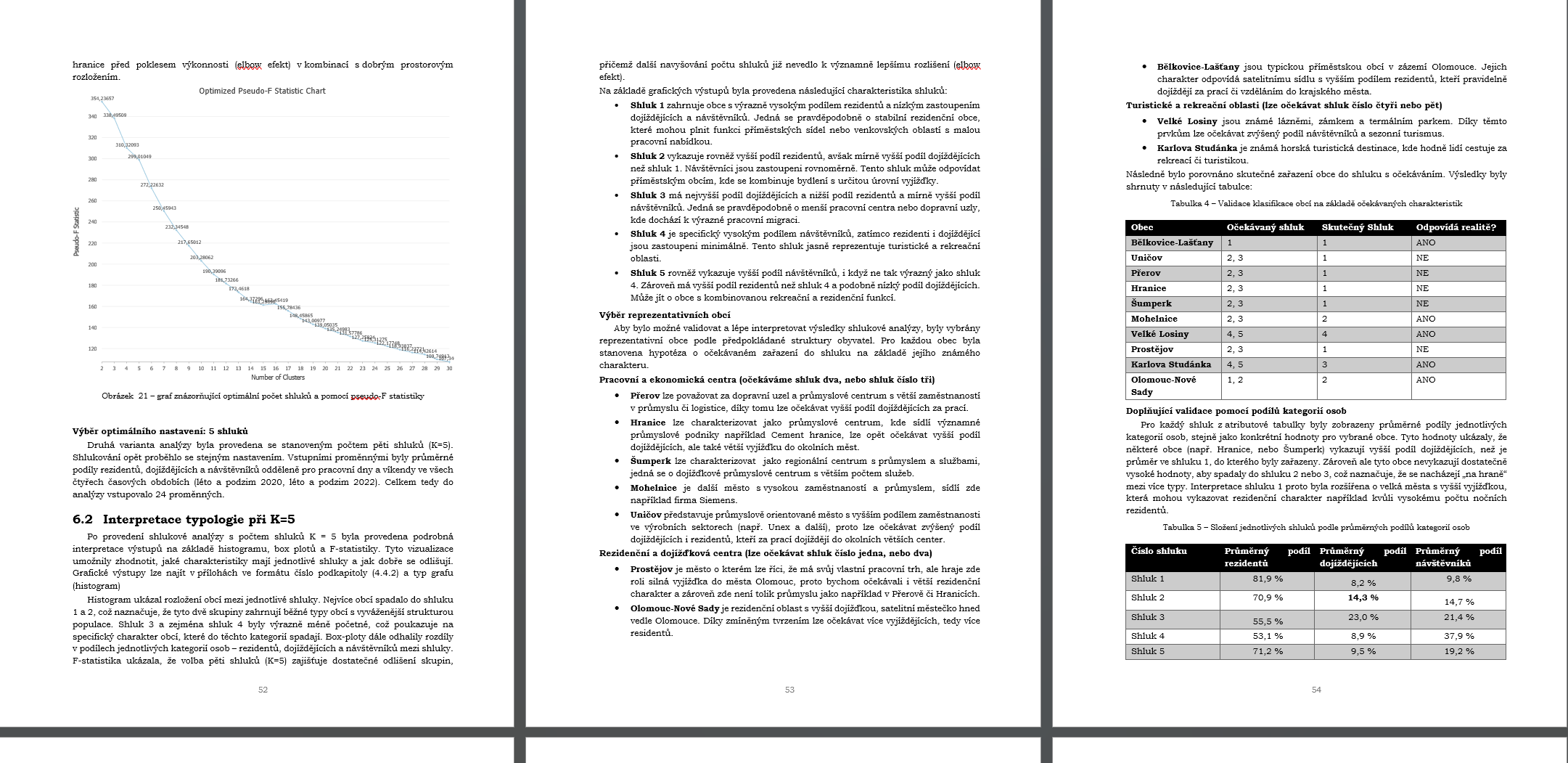
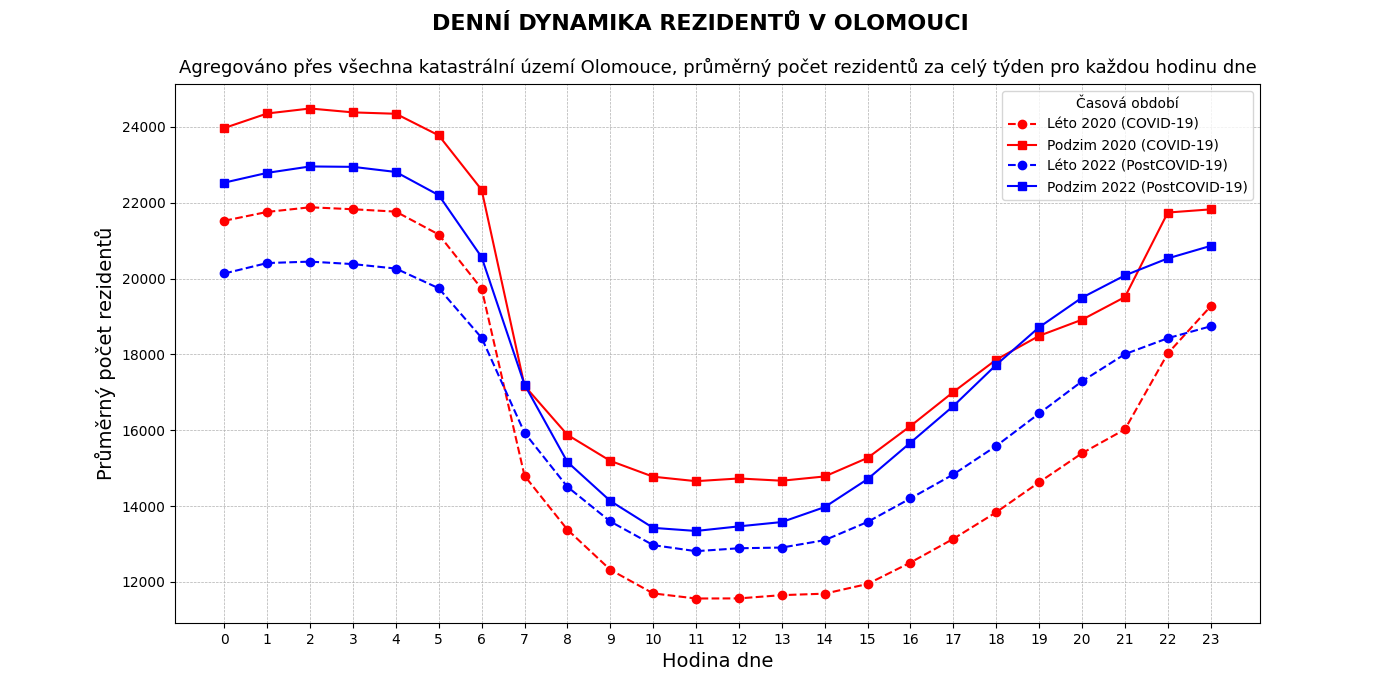
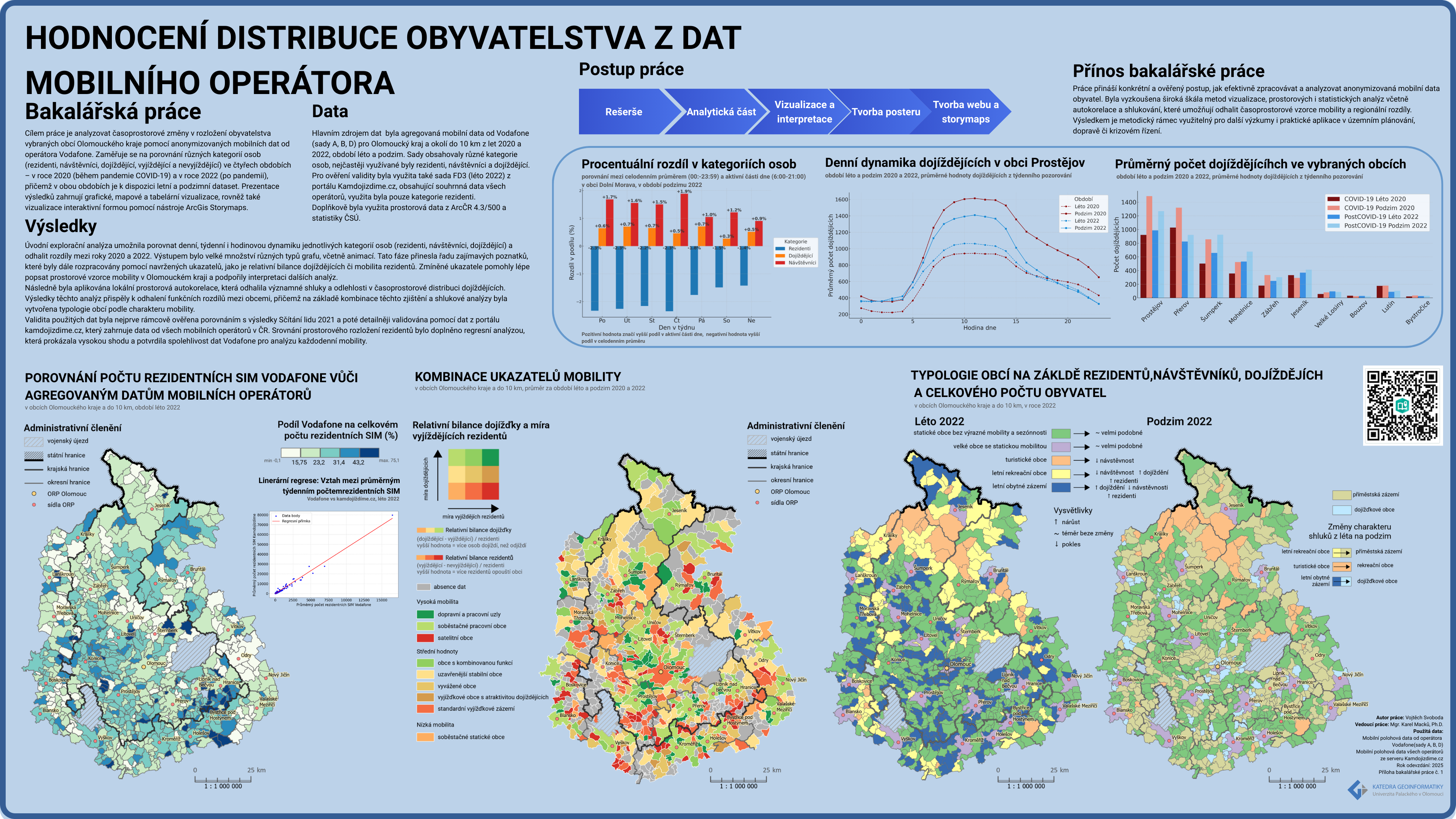
This bachelor’s thesis focused on the analysis of spatial and temporal mobility of the population in the Olomouc Region and its surroundings, utilizing a unique dataset from the mobile operator Vodafone. The goal was not only to identify daily and seasonal mobility patterns but also to validate the quality of these data using aggregated data from the three main mobile operators in the Czech Republic, sourced from the kamdojizdime.cz portal, and to create a typology of municipalities based on their functional structure. The work progressed from exploratory analysis to deeper quantitative methods, providing a comprehensive view of the population's behavior in space and time. The main contributions of this thesis include the creation of a systematic approach to analyzing daily mobility using mobile data, identifying key changes in time patterns (e.g., different structures of weekdays and weekends, seasonal fluctuations), and classifying municipalities into functional types according to their residential, commuting, or recreational roles. A crucial part of this classification was the use of structural graphs and mobility indicators, which allowed for a more precise differentiation between municipality types and contributed to the validation of established working hypotheses about their characteristics. The thesis also demonstrated that despite certain limitations, mobile operator data is well interpretable and can serve as a valuable resource for analyzing the spatiotemporal dynamics of the population. Cluster analysis enabled the creation of a clear typology of municipalities, which could be useful, for example, in urban planning. Thus, this bachelor’s thesis fulfilled all the requirements of the assignment – it analyzed the spatial distribution of the population based on mobile operator data, proposed and applied suitable methods for data processing and visualization, identified significant spatial and temporal mobility patterns, and created a functional typology of municipalities, with the results also summarized in an interactive format. The results of this work can serve as a foundation for further research in the field of mobility analysis and as an inspiration for applying mobile data in practice.